Pages

Showing posts with label interviews. Show all posts

Tuesday, 15 December 2015

Getting Noticed: The Impact of My Blog

My blog officially ‘went live’ six months ago, and I’m finally starting to see that my efforts are not going unnoticed. I now have a growing network on Twitter (Suzanne Collier started following me the other day!) and readers are even getting in touch with me via email. But one of the most exciting developments was being approached recently by two separate organisations asking whether I’d be interested in being interviewed and featured on their websites. Of course, I jumped at both of these opportunities, so I’ve listed the links below for any of you who’d like to read them.

My first interview was with Publishing Trendsetter, a website for young professionals in the publishing industry:


And the second interview was with Trident Media, one of the many media outlets run by the University of Hertfordshires Students Union:


More blog posts are on the way very soon!

Thanks for reading.

Gemma

Monday, 6 July 2015

Success! How I Secured My First Job in Publishing as an Editorial Assistant

My hunt for my first job in publishing officially started when I finished university in May, and after trawling through publishers’ websites, sending out triple-checked covering letters and CVs, and interviewing at a few pretty big academic publishing houses, I’ve recently accepted my first publishing job at Palgrave Macmillan as an Editorial Assistant. I feel like my hard work has finally paid off and I cannot wait to take the first step in my publishing career in a couple of weeks’ time.

But just in case you’re wondering how I reached this point (and how you can too), here are some of the most important things I did which helped me land my first publishing job:

Researched the industry
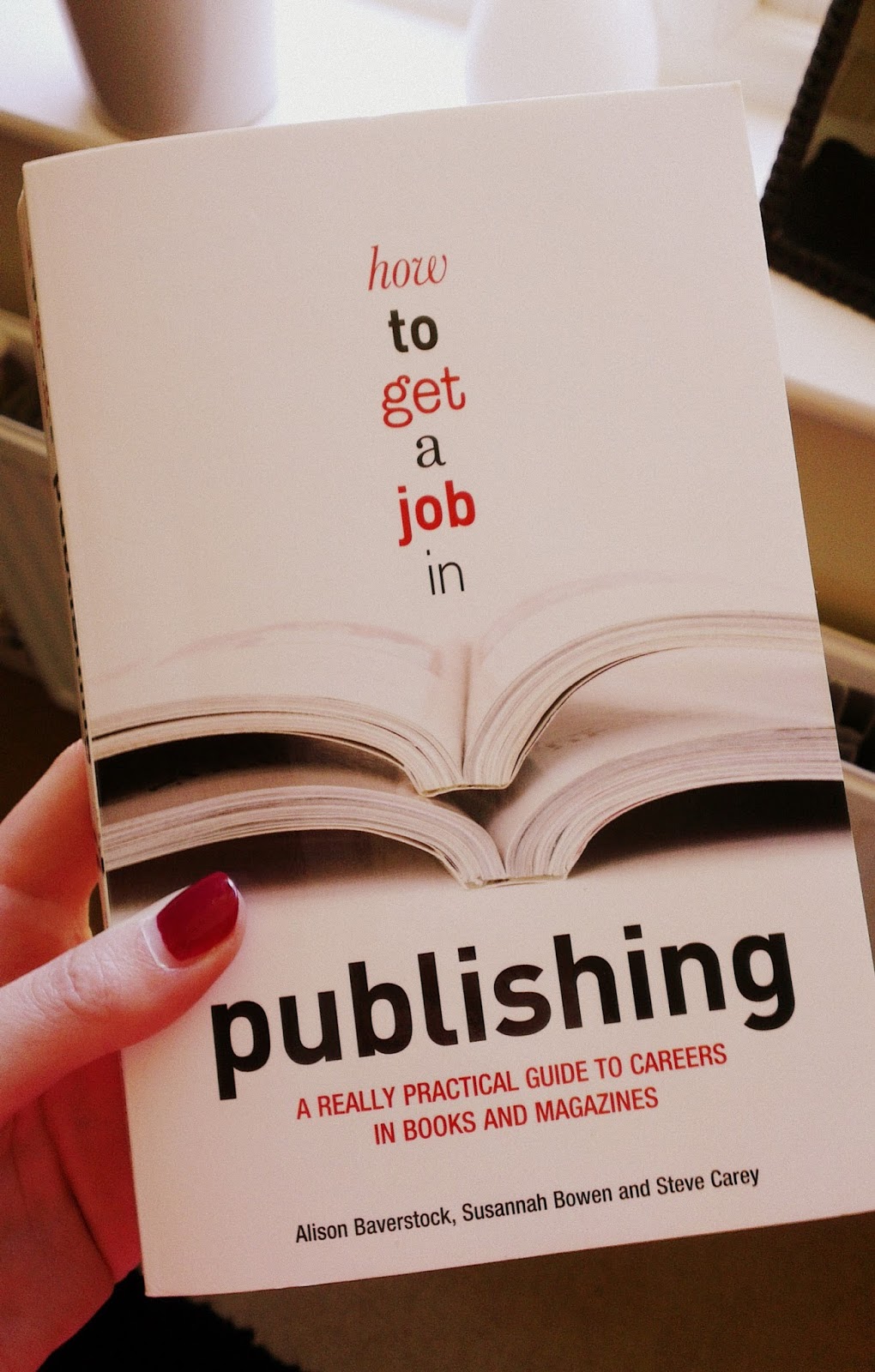
Technically, the process began for me during my first year at university three years ago when I was already considering the possibility of a career in publishing. Knowing very little about the publishing industry at the time, I decided my first step would be to start doing some research. The first, and by far the most useful, book I came across was How to Get a Job in Publishing by Alison Baverstock, Susannah Bowen and Steve Carey. This book provided me with the introduction to the industry I really needed. It discusses all the different types of publishing (trade, professional, education, academic, journal and magazine) as well as the different job roles within publishing (editorial, sales, marketing, production and rights), helping you to find out which areas of the industry might best suit your skills and interests. It also has some great advice on how to find internships, write flawless covering letters and CVs, and impress in interviews, as well as lots of useful tips from professionals inside the industry. So this book really is a great place to start if you’re eager for a career in publishing – it definitely helped me land my first job in the industry!

Completed internships
After reading the book mentioned above, I realised that completing an internship or gaining work experience was a must if I wanted to have any chance of finding a job in this notoriously competitive industry. I was lucky enough to complete two editorial internships at a small academic publishing house during my summers away from university, and these placements really were invaluable. Although unpaid, interning gave me a thorough insight into the editorial side of academic publishing and helped me catch the eye of prospective employers when I started applying for jobs after university. They were also a great way of proving my unwavering commitment to the industry.

There are a few things to think about, however, before you start applying for internships or work experience. First, these placements are often unpaid, so they might not be an option for everyone. Second, as tempting as it is, don’t just apply for every single opportunity you come across. You should think about which type of publishing you want to go into and which department you want to work in. Yes, any experience is good experience, but it will be much more valuable in the future if it’s an area you actually want to work in! You might want to look for marketing internships at non-fiction trade publishers, for example. So once you’ve considered what areas you’re interested in, try and find a handful of small publishing houses within these areas (don’t just go for the big names), see what internship/work experience opportunities they offer, and tailor your covering letter and CV for every role you apply for. This method brought me some great results and gave me lots of relevant industry experience.

Created standout covering letters and CVs
Once I’d completed a couple of internships and finished university, I was ready to start applying for full-time jobs in publishing – this meant creating the perfect covering letter and CV for each role I applied for.

With my covering letter, I didn’t want it to look like I was just sending out the same standard letter to each publishing house. So instead, in every letter I sent out, I not only highlighted my relevant publishing experience, but also emphasised my knowledge of, and interest in, the particular publishing house I was applying to. In my covering letter for the position at Palgrave Macmillan, for instance, I mentioned a title of theirs which I’d read at university and I also congratulated them on the success of their new Palgrave Pivot book format. So your covering letter should demonstrate both your suitability for the role and your interest in the publishing house. Is there a title of theirs you recently enjoyed reading? What excites you about this particular publishing house? Have they won any awards recently? Make the publisher feel like you really want to work there. Just think, if you were reading the hundreds of covering letters that came in for one vacancy, what would impress you?

Alternatively with my CV, I made sure to draw attention to my relevant editorial internships and include detailed descriptions of what these placements involved. I also referred back to the job description for each role I applied for to see what specific skills they were asking for and then added examples of where I’d previously demonstrated these skills to my CV.

So make your covering letters and CVs stand out by tailoring them for every role you apply for. Although it is time consuming, making an effort like this will really increase your chances of being invited to an interview. It’s definitely worth it!

Prepared thoroughly for interviews
Averill Chase, a now retired publishing professional, gives the following advice to publishing interviewees: “sell yourself – no-one else will”. I loved coming across this quote. It made me think, how well could I actually talk about me? Could I explain how suitable I was for an editorial assistant position persuasively and effectively? The starting point for my interview preparation was, therefore, to focus on ME. This meant making sure I could talk positively about myself and could discuss in detail all my skills and experience relevant for the position. I practised this simply by talking to myself out loud!

Once I was confident that I could sell myself well, I spent the rest of my time doing more research on the publishing house. I made sure that I’d read a few of their titles, that I could demonstrate a familiarity with the list I’d be working on, and that I was aware of their new and innovative projects. I also researched the company’s values and memorised their mission statement so I could make brief references to these during my interview.

Next I prepared a list of questions ready to ask the interviewer. These included one about the job role, one about the interviewer’s own publishing career, and one about the publishing house itself. Some questions I asked were:
  • What will be my biggest challenge in this position?
  • What’s your own experience of working at this publishing house in terms of career progression and company culture?
  • Are there any areas of your list which you’re currently trying to develop?
My final bit of interview prep involved guessing questions that might come up and having answers ready for them. You can read more about this in my previous blog post: 5 questions likely to come up in a publishing interview.

Started writing this blog!
Finally, I think setting up this blog whilst job hunting actually helped me secure my first publishing position. During my second interview at Palgrave Macmillan, I was asked whether there were any projects I was working on outside of university, giving me the perfect opportunity to talk about my blog. The interviewer seemed really impressed when I explained how I was writing about my pursuit of a publishing career whilst trying to help other people with similar aspirations to me. So this blog might have just set me apart from the other candidates I was up against! If you’re thinking about setting up a blog related to publishing, reviewing books is a great way to show that you’re keeping up with the latest and most popular books gracing the shelves.

So they were some of the most important steps I took which helped me land my first job in publishing. Maybe theyll do the same for you!

Monday, 22 June 2015

5 Questions Likely to Come Up in a Publishing Interview

After spending the last month applying for editorial assistant job vacancies, I’m pleased to say that a lot of my time recently has been taken up by interviews at a few (pretty big) academic publishing houses.

During these interviews I obviously met a wide variety of professionals in the industry (editors, assistant editors and publishers) from all different publishing houses, but there was one thing I noticed that didn’t vary quite so much: the interview questions.

I found that certain questions just kept reappearing; some I’d envisaged (thankfully) and pre-prepared answers to, others completely stumped me the first time round. So to help you prepare (and preparation is key), here are five questions that I think are extremely likely to come up in a publishing interview and my advice on how to answer them:

1.      What led you to wanting a career in publishing?

This is an obvious question that is bound to come up, but an impressive and original answer needs preparation. Try to come up with something that isn’t just, “I love reading” – that’s not enough. Think about the type of publishing you’re trying to enter into. Why does that particular area interest you? For me, academic publishing became an interest at university after researching lots of literature essays. I got a real buzz out of finding useful, up to date and high-quality scholarly titles, so being a part of the publication process for cutting-edge academic research genuinely excites me. If, alternatively, you’re interested in trade publishing, where, when and why did that interest start? An influential book in your childhood? Or maybe there was one book that changed your outlook on life. The point here is to be original – this is much easier than you think when you’re pursuing a goal you feel really passionate about.

2.     Why do you want to work for this particular publishing house?

When answering this question, make sure you show off all the research you’ve done on the publishing house. Find their mission statement, browse their website, see if they’ve been in the news recently, read a couple of their recently released titles. After carrying out this research, what did you find that particularly excites you about the publisher? For me personally, a career at Palgrave Macmillan interested me not only because they’re a prestigious and highly-regarded academic publisher, but also because they’re extremely innovative and forward-thinking with projects like Palgrave Pivot, Palgrave Open and Palgrave Connect. So find something specific that attracts you to this particular publishing house and use it to show your genuine excitement at the possibility of a career there.

3.     What do you think are the main job responsibilities for this editorial assistant position and what skills do you possess which will allow you to carry out these responsibilities successfully?

This was a question I actually quite liked as it gave me the chance to demonstrate two things. First, that I had a clear understanding of what the role would involve (publishers like this), and second, how suitable I was for the position. When preparing for your interview it really is worth going through the job description and finding the main responsibilities you will be tasked with. Once you’ve picked out the main ones, ask yourself what skills will each of these responsibilities require? Then come up with examples of where you’ve previously used each of these skills. So, for example, one of the job responsibilities for an editorial assistant at Palgrave Macmillan was managing editorial processes and the peer review process. A task like this obviously requires great organisation and time management skills, so I took examples from my time as an editorial intern when I often had to juggle a variety of tasks given to me by project editors. So approach this question logically; make sure you know exactly what the role will involve, think about the skills needed to carry out these responsibilities, and have examples ready to demonstrate these skills.

4.     Which publishing houses are our main competitors and are any of them doing something you think we should be doing?

The competitors question came up during my interviews at Cambridge University Press and Palgrave Macmillan. Although I was aware of their main competitors and could easily list them, the second part of the question gave me a slight panic attack. But after taking a few moments to actually think, I came up with a pretty good answer. I knew from my research that academic publishing is currently undergoing immense change because publishers are making the conscious effort to become more digitally focused. This reminded me of the competing eBook digital platforms that numerous academic publishers now offer to universities (Palgrave Connect from Palgrave Macmillan and University Publishing Online from Cambridge University Press). So I based my answers around comparisons of these platforms and came up with some good areas for improvement. Remember, publishers ask questions like this one to test your knowledge of the industry, so it’s a great way to show you’re keeping up with current trends. My advice is to not only research the publishing house you’re interviewing at, but also one or two of their main competitors. Make sure you have an idea of how competing publishers are trying to outdo each other!

5.     Do you have any areas of weakness? If so, what are they?

This is a pretty standard question for any interview, but it was one I’d completely forgotten to prepare for. First off, make sure you actually give them a weakness – we all have more than one. Then, try to emphasise that it is a weakness, but a weakness you’re working on. Give an example of how you’ve recently made an effort to improve in this area. This says a lot about you as an individual.

Ace these likely questions and you might just ace the interview! There’s really no excuse not to have an impressive answer to each of these questions. Preparation really is key!

Thursday, 18 June 2015

Dealing with Failure: My First Publishing Interview

Friday. Four days after my interview for an editorial assistant vacancy at Bloomsbury, and I was curled up in bed replaying the interview over and over in my mind after hearing the news that I’d been unsuccessful. ‘Gutted’ was an understatement. Had it really gone that badly? What did I do wrong? With all these thoughts running through my head, I was starting to doubt whether I was capable of ever achieving my goal of a career in publishing.

Then I realised two things. First, that it was time to stop being so harsh on myself and give myself a bit of credit. Applications for the role would definitely have been in the hundreds, so my covering letter and CV must have been pretty impressive to even get me to the interview stage in the first place. Second, that having a meltdown was really not benefiting me at all, so it was time to deal with my interview failure in a more constructive way. This meant being honest with myself about how I felt the interview really went, and led me to writing this blog post.

So, as you’re not always going to get the first publishing job you apply for, here are some steps I took that helped me deal with my interview failure in a more productive way:

Replaying the interview
I got out of bed (eventually) and decided to replay the interview back in my mind – just one more time. This time though, I wrote two lists: one with everything I thought went well, and the other with things that didn’t go so well. I decided to be brutally honest with myself. This meant stopping my tendency to erase the bad bits from my mind and confronting them head on. Unsurprisingly, this process gave me an indication of where I went wrong. On my ‘good’ list I had lots of things relating to the research I’d carried out on the publishing house itself and I was impressed with how I’d been able to talk about some of the titles Bloomsbury’s academic division had recently published. I came to realise, however, that on my ‘good’ list there wasn’t all that much about ME. This quickly gave me the first item for my ‘bad’ list: I didn’t sell myself nearly as well as I could have done.  Although showing my knowledge of the publishing house was great, what I should have done more of was demonstrating my undeniable suitability for the role. The listing process therefore taught me a fundamental lesson about how to better prepare for interviews in the future: practise selling myself!

Moving forward

There’s this great quote from Kamal Ravikant that says, ‘we, as human beings, think we’re thinking. Not true. Most of the time, we’re remembering. We’re re-living memories.’ After all the remembering involved in the previous step, I wanted to stop dwelling on the past and start thinking forward. How could I make myself stand out from all the other candidates I would be up against in my next interview? It was time to try something new. This made me think of a meeting I’d had during one of my editorial internships with the publishing house’s managing director. When given this opportunity I’d decided to ask for some future interview advice, and this was his response: 
Don’t just research the publishing house on their website. It does show initiative and a certain degree of interest in the company, but it’s also what every other applicant will do. Instead, buy one of their books physically off the shelves, read it, and be prepared to talk about it. Perhaps even bring it along with you to the interview!” 
Ideas like this one really changed my mental approach to interviews; I felt less nervous, more confident, and couldn’t wait to see how interviewers would react to me trying something different. (I actually tested this idea out recently and have just been invited to a second interview – so having the courage to try something different definitely pays off!)

Reminding myself of my worth 

‘Your value does not decrease based on someone’s inability to see your worth.’ I actually came across this quote the day after I found out I’d been unsuccessful and it definitely put a smile back on my face. Receiving a rejection when you’re pursuing a career you feel passionate about can often make you doubt yourself and your abilities, knock your confidence, and make you want to give up on your dream altogether by running in the other direction. Trust me, I’ve experienced this. But the quotation above reminded me not to do this. It reminded me that as long as I believe in myself, remember my worth, and recognise my value, I will, without doubt, achieve my goal. So what if Bloomsbury couldn’t see my value? I still recognise it, and I will make other publishers recognise it too.

So what have I taken from my first publishing interview experience? Not only have I learnt that the interview process is also very much a learning process, the experience has also made me understand the importance of failing. Although I was no doubt aiming to succeed, experiencing failure has actually taught me a lot about myself, shown me what I need to work on, and fuelled my desire to improve in the future. Perhaps the experience wasn’t such a failure after all!